
I’ve not written much in the last couple of weeks about the game dev stuff, as I was waiting to have something I was pleased with to show off. Well. Here we are anyway.
It Started So Well
I start things pretty well. I like to set out what I’m going to do and this project was no different. I found a template for a Game Design document and just started filling in headings.
I wrote down, what the game would be, what it would involve, what it was called, and most interestingly for me, added my core pillars. These are the things that I’ll hold most forefront in my mind as I create the game, making sure everything I add, features, art etc aligns with at least one of these. Exciting.
I’d made progress, it was written down and it seemed like I was doing it ‘properly’. In that I’d not started by drawing anything, I’d made a plan. That’s what makes for a successful project right?
I’d even drawn some character art and got a test level running to check animations:
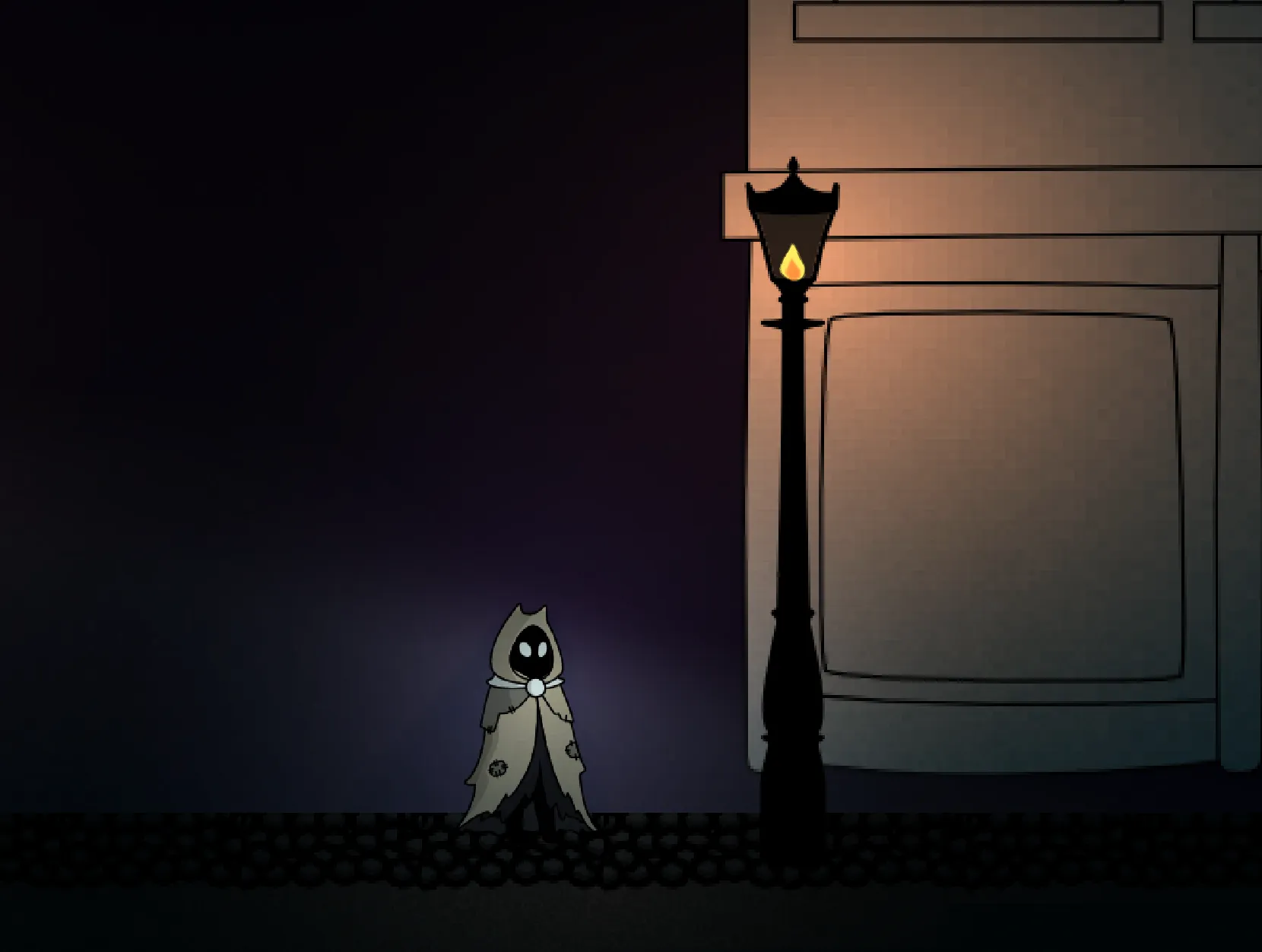
You can read a little about what I set up for this level in my I’m Making A Game! article. I won’t throw this in the bin, but refactor the mechanics for a different style.
The First Detour
I started thinking about the art style, and I think there were a few things that just didn’t sit right with me about it.
I was trying to create something that honestly, was way out of the scope of what I’m currently able to do, both in terms of skill and time. I started getting bogged down with how I was going to create the art, and how much time it was likely going to take, when all I really wanted to do at the moment is learn.
I spent a lot of time looking at other creators on Threads, which provide endless inspiration, but also endless possibilities. I found myself getting lost in the ‘what ifs’ of the project, and I was getting more and more indecisive about what I wanted to do.
I wanted to reduce the scope of the game, to both make sure it was a defined loop and so I stood a better chance of finishing it.
I decided to pivot to pixel art, not because it’s easier, it’s still art, but it’s slightly more forgiving. The lower resolution means less time spent perfecting a single frame and more time on an entire animation sequence for example.
Though even as i type this now i’m looking at the screeshot above thinking maybe that is better argh!
The Second Detour (And The Third)
The second problem, I haven’t fully resolved. This is a game about grief, loss, and pain. But it’s still a game. It needs to be if not ‘fun’ at least satisfying to play.
I was struggling in the previous iteration with a need to make it more ‘Hollow Knight’ like and add combat. But combat didn’t mesh with the themes I was going for. So I added, then removed ideas that involved battling through enemies. This back and forth somehow made what I’d already done feel lesser in some way, and it made me want to ditch the whole thing and start again.
Getting Out Of My Own Way
So, reduce the art complexity, thats easy enough since i’m still at the early stages of this project. The other thing I wanted to do is look at the, now, very complicated game design I’d written mostly at the beginning, and realised it was now holding me back. It had become too complex and full of ideas I couldn’t achieve right now. So I set about removing sections and ideas that honestly didn’t really add much to the game experience or story at all.
For example, I went back to the core themes, what I wanted this to be, and what I thought I could realistically achieve. A simple setting and premise, achievable art style, and a defined structure. Then I removed basically everything else.
Back On Track
Stripping back the design document gave me more room to breathe. What was left once I removed everything I couldn’t realistically achieve turned out to be a better, smaller, more focused, and with a clearer emotional core. Here’s where things stand now.
The New Synopsis
Socius is asleep in front of the fire. His master sits nearby, talking to him softly the way people talk to their pets, without expecting an answer and without knowing it matters. It matters.
-
The game is a platformer about a cat dreaming.
-
The levels are the dreams, and the master’s words, his memories and his kindness, shape and sustain the world Socius moves through. What the master says bleeds into the dream and affects the world Socius, and the player is moving through.
-
Between each level, there is a cutscene. The master walking past. At first nothing unusual, maybe he puts down a bowl of food. As the game progresses, something builds in these scenes a particular kind of sadness that pet owners will recognise.
-
The game ends with Socius curling up in front of the fire mirroring the first scene and the master walks past one final time.
-
The experience comforts, not scares. Though it deals with some difficult subject matter, the loss of a pet. It is for anyone who has ever talked to an animal and wondered if it meant something.
Key Mechanic
In this new revision, there is a clear mechanic which was missing from my first iteration, the words of the master affecting the world Socius is moving through.
These are the words the master is speaking to Socius as he is asleep. They offer positive progression, maybe he uses the words as a bridge over a chasm he couldn’t otherwise cross, that sort of thing.
Where we are today
So that’s where I am. Still very much at the start, but with something I actually believe in, and understand this time. The lesson, if there is one, is that the planning process became the obstacle, the document that was supposed to keep me on track was the thing that needed questioning.
Less is more. At least for now. Next up: pixel art, and probably a detour I haven’t thought of yet.